

It’s 4:45 in the morning here in California, and I’m doing what any reasonable CEO does when they can’t sleep—rewriting our company white paper using Storytell.ai.
Here’s how I’m using Linear engineering tickets and the Storytell capabilities doc I created in my last post to turn an outdated white paper into something fresh, relevant, and useful for our customer success, marketing, product, and sales teams.
Updating White Paper Doesn’t Have to Be Hard
Technical content like white papers go stale in enterprises, fast. They are usually treated as static documents because they are a chore to research and write.
Yet your product evolves. Your capabilities expand. Your positioning shifts. But that white paper you labored over six months ago? It’s still sitting on your website, confidently claiming things that are no longer right. And worse, all the new capabilities your product and engineering teams worked so hard to build and ship aren’t represented at all.
The Storytell Approach: Remix & Repurpose the Work You’re Already Doing
Earlier in the day, I had updated our core technical Storytell Capabilities document. You can find a detailed post on how I did that here. Now I was ready to utilize that to power an update to the white paper we share with enterprises so they can understand how Storytell works.
I started by uploading the existing white paper into Storytell and writing this prompt:
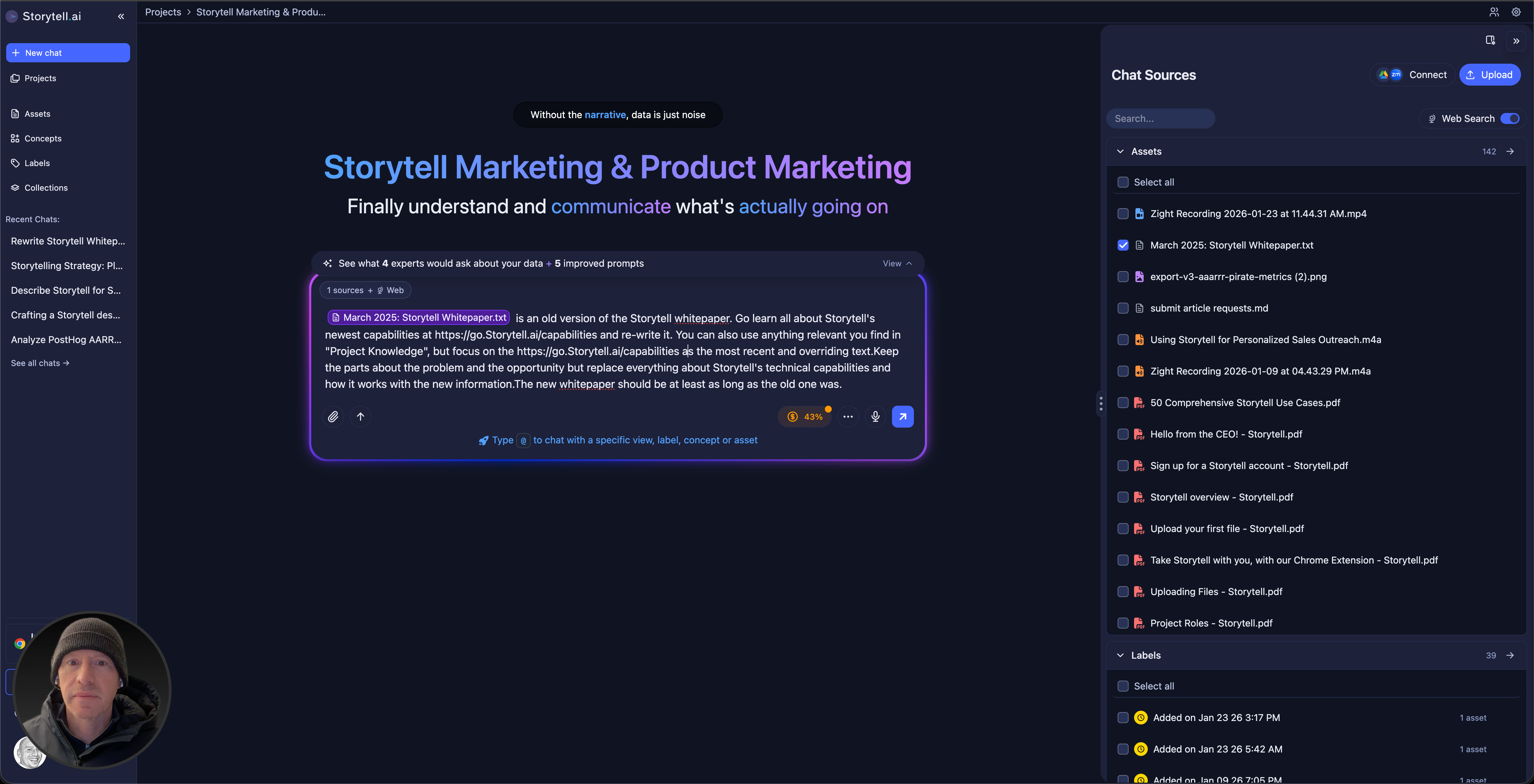
Storytell gave me an updated version of the white paper. I was able to use DiffChecker to see what was different between the old and new versions:
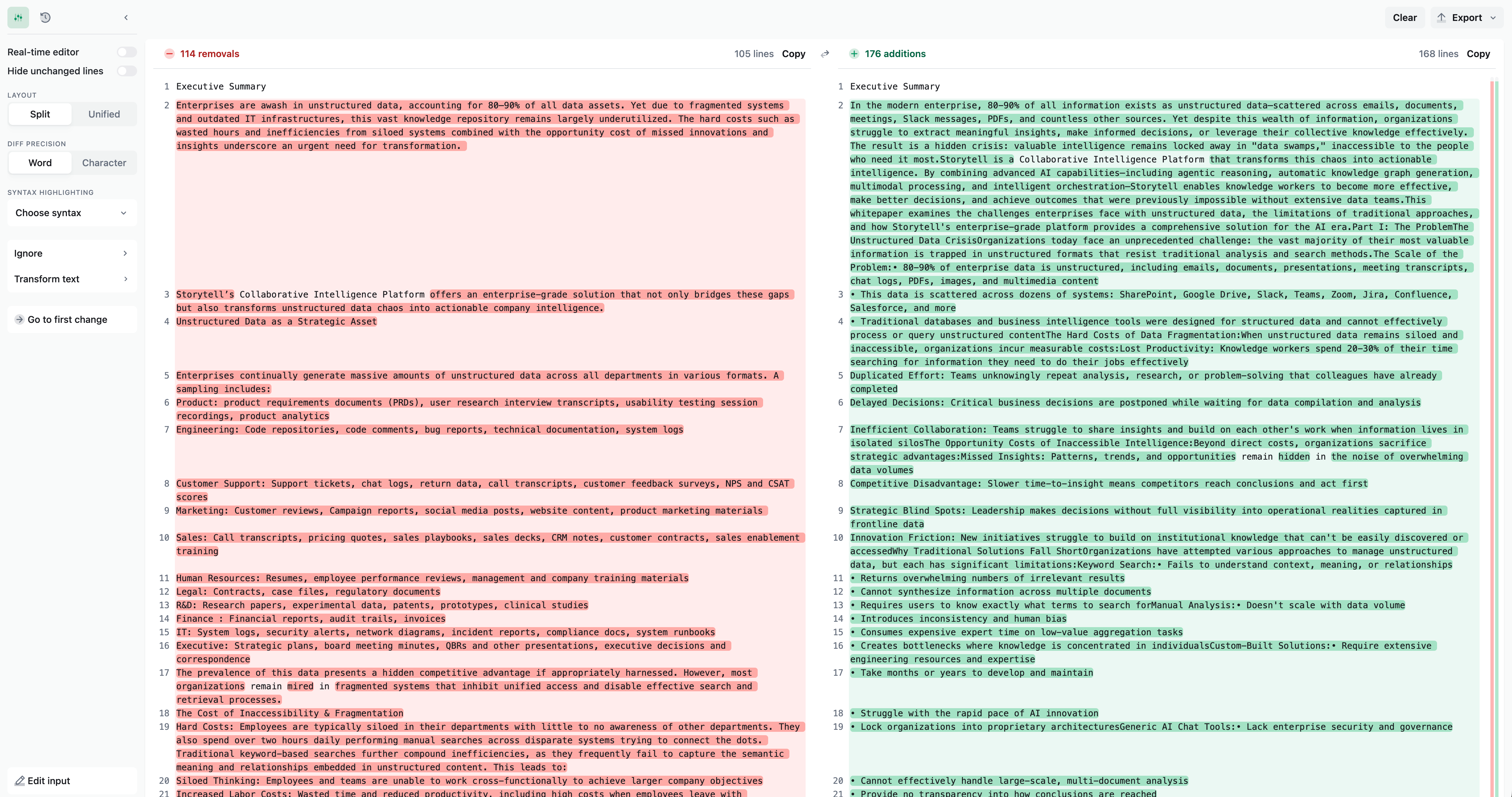
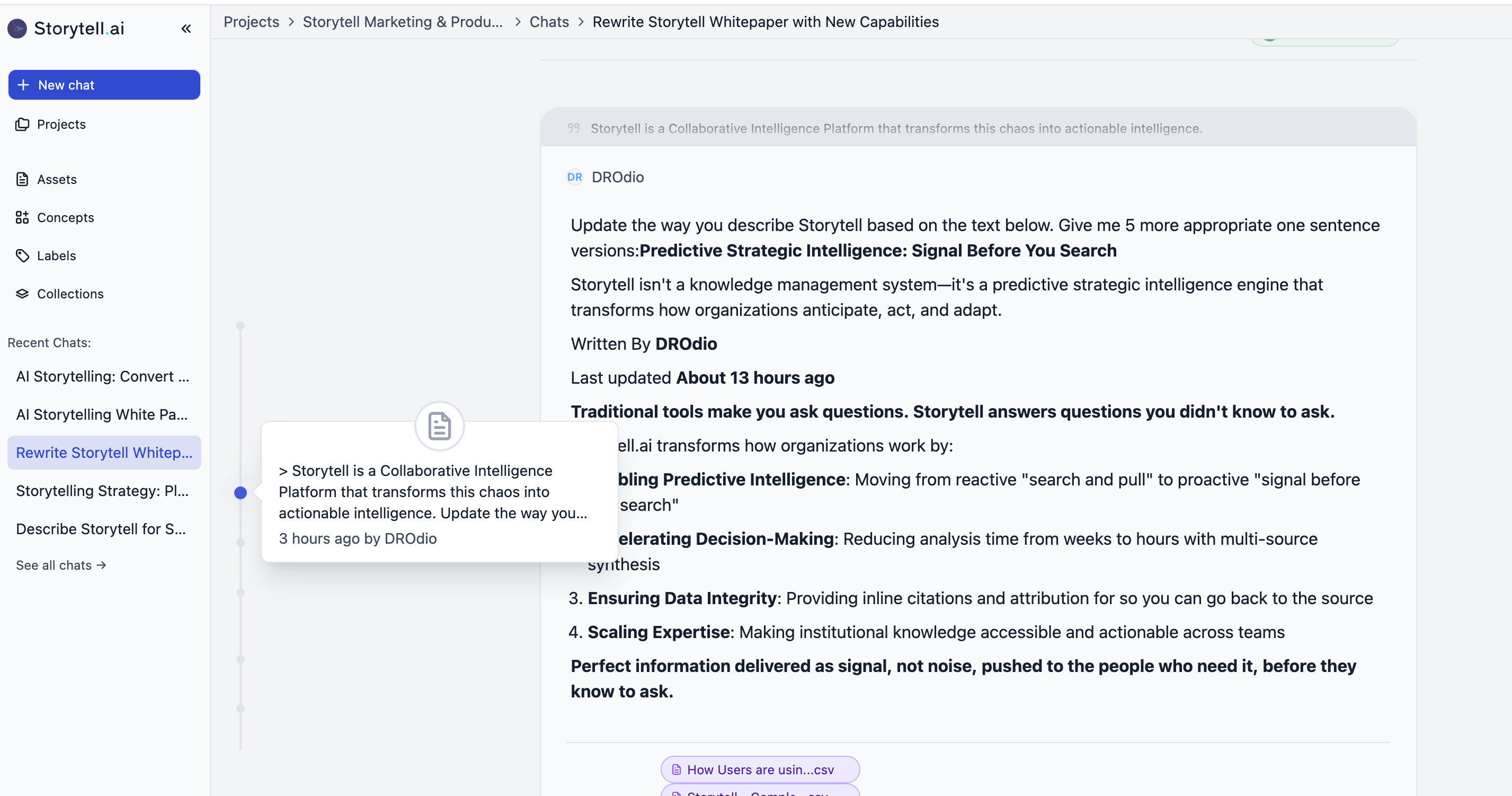
This is where the magic happens. Instead of manually editing every section, I simply told Storytell about our new capabilities. Storytell knows our voice, understands our positioning, and can intelligently weave these updates into the existing narrative.
I was able to prompt Storytell for specific updates I wanted around how we describe Storytell’s capabilities. Note the timeline to the left of the chat thread: It’s an easy way to scroll through prompts & responses.
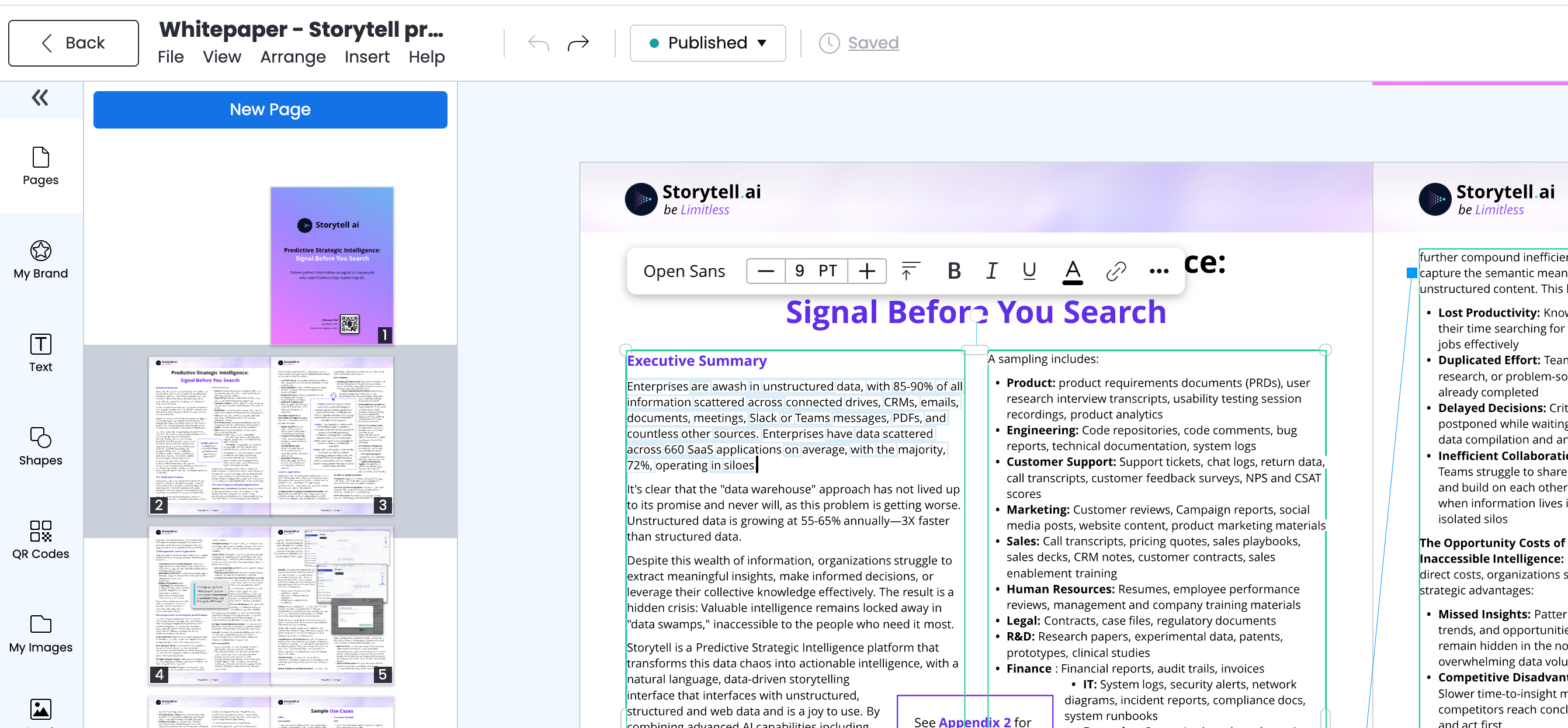
Now comes the human touch. I went through each section, editing where needed, keeping what works, and copying the updated text into a new document. Storytell makes this iterative—I can update sections, regenerate, and keep refining until it’s exactly right. (If you’re interested in understanding how I think about “original work” when thought-partnering with AI, read this post I wrote on my personal blog, “The Slide Rule Moment: When Better Tools Threatened “Real” Work.”
We use Marq to lay out and publish our Storytell materials. I would flip between Storytell and Marq to refine sections of the white paper
Compressing Timelines
If you’re working on a timeline for a new project or product launch, this approach is a game-changer. Instead of waiting weeks for your team to write from scratch, you can refresh and update existing assets in hours based on the work they are already producing, like Jira tickets, Customer support tickets, engineering tickets Slack or Teams threads, Zoom or Gong sales calls and so much more.
Your marketing teams can create updated collateral from existing work instead of waiting. This means your sales teams get current talking points faster, your product and engineering teams can focus on actually shipping instead of spending time interfacing with marketing. And your customer success team has materials that accurately reflect what customers will experience.
Want to read the final output?
You can find the living version of the white paper I edited here: White paper - Storytell predictive strategic intelligence platform, as well as the underlying technical capabilities document I used to power this iteration of the white paper (and I created in my last post) here.
The Deeper Lesson
This isn’t really about white papers. It’s about how we approach updating and maintaining all our content as companies evolve, using the work that’s already being done inside the company but was never compatible with the workflows marketing teams needed to use.
We used to think of content creation as discrete projects: write it, ship it, move on. But in reality, our best content should be living documents—evolving, improving, staying relevant, and those updates should be based on artifacts being created by the organization as they get their work done.
By utilizing Storytell, your white papers and other collateral move from being statis PDFs to living narratives that grow with your company.
Now if you’ll excuse me, the sun is starting to come up in California, and I have a refreshed white paper to share with the team.


